

Combustion gas recirculation is one of the most effective strategies for improving the performance of industrial aluminum recycling furnaces. This approach advances the decarbonization of the process while increasing productivity and reducing operating costs.
The integration of recirculation systems has a positive impact on both the environment and operations at industrial facilities.
1. Reduction of pollutants
By reintroducing hot gases with lower oxygen content into the combustion process, the maximum temperature inside the chamber is moderated. This results in a significant reduction in the formation of nitrogen oxides (NOx).
2. Increased thermal efficiency and reduced energy consumption
It allows the residual heat from the exhaust gases, which would otherwise be lost, to be utilized. By reusing part of this heat:
- The amount of fuel needed to reach and maintain process temperatures is reduced.
- Less fuel means fewer direct CO₂ emissions per ton of recycled aluminum, thus reducing the carbon footprint of the process.
The real impact: beyond the furnace
Although gas recirculation does not directly eliminate the CO₂ generated by combustion, its contribution to greater energy efficiency and lower fuel consumption has a clear effect on the carbon footprint of the industrial process.
This aspect is particularly relevant in aluminum recycling, where the thermal efficiency of the furnace accounts for a significant portion of total emissions. In this context, advanced technological solutions make a difference.
CDM Eco-Unit®: energy efficiency and carbon footprint reduction
The CDM Eco-Unit® is a compact, integrated solution for the decoating and melting of post-consumer aluminum scrap. This technology combines decoating with a continuous melting process, using the hot gases generated in the furnace to feed the decoating system.
During this process, the gases introduced into the decoating unit are enriched with Volatile Organic Compounds (VOCs), which are then reintroduced into the furnace. The energy contained in these VOCs is used to smelt the aluminum, significantly improving the overall efficiency of the system.
Its main benefits include:
- Maximum metal yield, thanks to the separation of the decoating and smelting processes.
- Complete incineration of VOC gases, complying with the most demanding environmental regulations.
- Reduced energy consumption through the use of hot gases (approx. 30% less than in conventional processes).
- Recirculation of hot gases in the system, minimizing the need for gas filtration equipment.
The CDM Eco-Unit® is thus consolidating its position as an effective tool for moving towards increasingly sustainable and efficient aluminum production, in line with the industry’s decarbonization objectives.
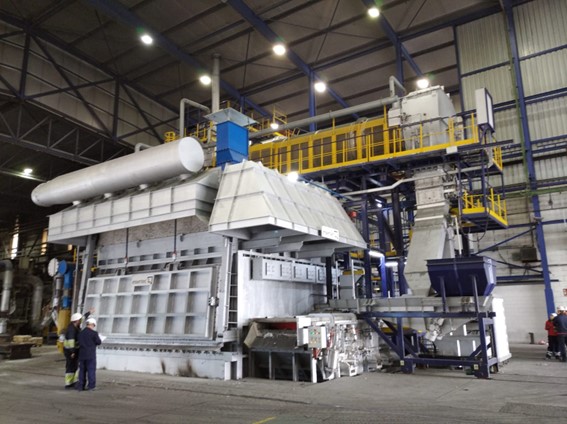
For more information:
https://www.insertec.biz/thermal-engineering-solutions/industrial-heating-equipment/cdm-eco-unit/