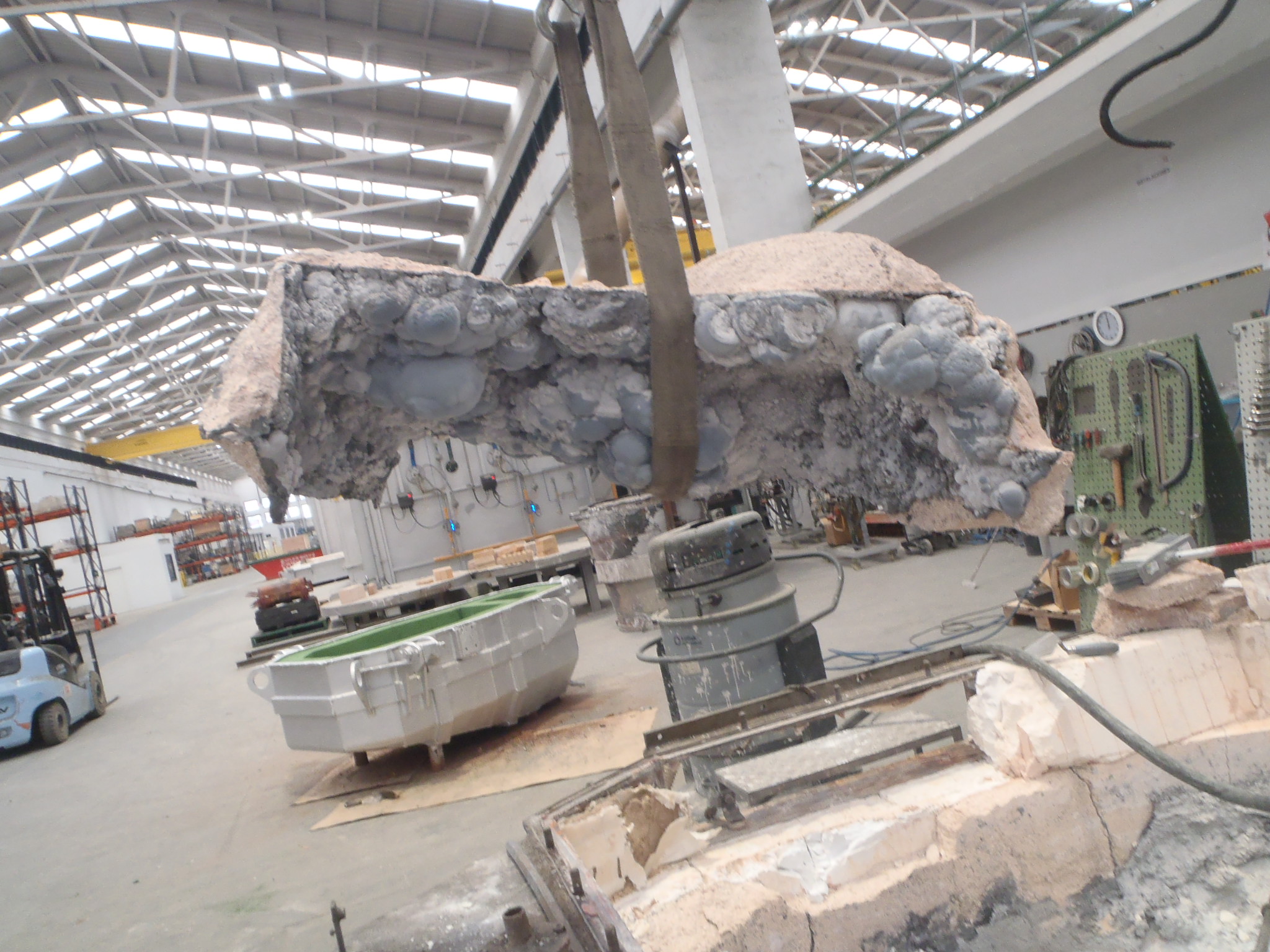
The adhered corundum layer is initially soft and can be easily removed, but in later stages the product becomes dense, hard, and difficult to remove during cleaning, and may cause mechanical damage to the lining during removal.
Therefore, it is clear that corundum buildup is one of the main factors influencing energy consumption, since corundum regrowth can reduce the furnace’s floor capacity and thermal conductivity in the walls; the furnace’s service life is also reduced due to differential thermal behavior.
Corundum regrowth requires intensive cleaning of the lining using cleaning fluxes and mechanical tools, which cause wear on the hot-face lining and result in heat loss from the furnace.
The use of certain refractory materials can also help reduce corundum regrowth; in general, phosphate-bonded materials exhibit excellent resistance to aluminum metal penetration and corundum overgrowth.